


HOMEMADE GERMAN SAUERKRAUT
Ingredients
- 1/2 small head cabbage shredded (roughly 4 cups or 11 oz)
- 2 tsp kosher salt
- 1 tsp caraway seeds optional
Instructions
- In a large bowl, mix the shredded cabbage with the salt and caraway seeds (if using). Let the mixture rest for 15-20 minutes to let the salt start drawing moisture out of the cabbage. (To speed up the process, you can get in there with your hands and massage the cabbage and salt together for 5-10 minutes.)
- Wash a quart mason jar well with hot soapy water. Pack the salted cabbage mixture (and any juices) into the clean jar. Pound the cabbage with the back end of a wooden spoon to pack it tightly and remove any air pockets.
- Place a quart-sized Ziploc bag into the jar (use one that you know holds a tight seal). Fill the bag with water and seal the bag. This will act as a weight and help to keep all the cabbage submerged. Cover the jar with a towel, cheesecloth, or coffee filter.
- Check the sauerkraut after 24 hours. If the cabbage is not entirely submerged in brine, add a saltwater mixture of 1 tsp salt to 1 cup water to the cabbage, just until it is submerged.
Notes
HOMEMADE GERMAN SAUERKRAUT
Crunchy and tangy this homemade German sauerkraut recipe is easy to make in small batches on your kitchen counter!
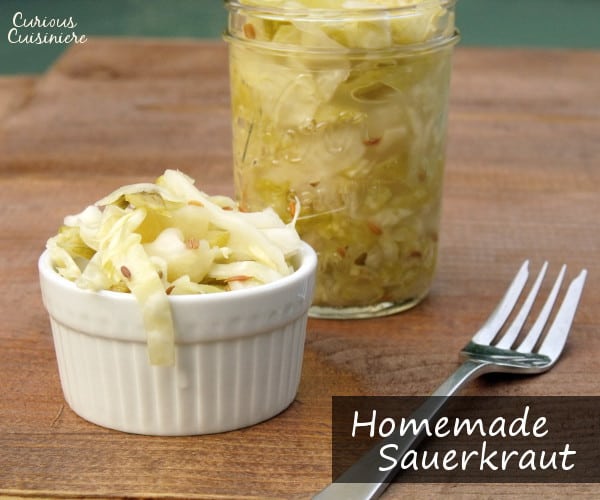 Homemade sauerkraut isn’t like what you buy from the store. Yes, it still has that pleasantly tart/sour flavor. But, it’s crunchy! That’s the way sauerkraut is supposed to be!
HOW IT WORKS
Sauerkraut (the German word for sour herb) is made by an age-old fermentation process called lactofermentation.
Lactobacillus is a good bacteria found on the surface of many fruits and vegetables, even in yogurt.
As the cabbage is submerged in a salt brine, the lactobacillus begins to convert the sugars of the cabbage to lactic acid, which is a natural preservative.
Homemade sauerkraut isn’t like what you buy from the store. Yes, it still has that pleasantly tart/sour flavor. But, it’s crunchy! That’s the way sauerkraut is supposed to be!
HOW IT WORKS
Sauerkraut (the German word for sour herb) is made by an age-old fermentation process called lactofermentation.
Lactobacillus is a good bacteria found on the surface of many fruits and vegetables, even in yogurt.
As the cabbage is submerged in a salt brine, the lactobacillus begins to convert the sugars of the cabbage to lactic acid, which is a natural preservative.
HEALTHY HOMEMADE SAUERKRAUT
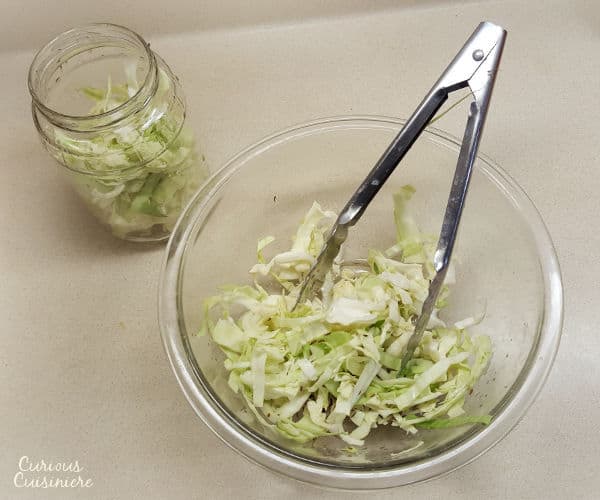 JUST SALT AND CABBAGE: A SIMPLE SAUERKRAUT RECIPE
You really can’t get more simple than the ingredients for this sauerkraut recipe.
JUST SALT AND CABBAGE: A SIMPLE SAUERKRAUT RECIPE
You really can’t get more simple than the ingredients for this sauerkraut recipe.
Salt and cabbage!
Some people like to do this by covering the shredded cabbage with one larger cabbage leaf, and then nestling a smaller jar inside the mouth of your fermentation jar.
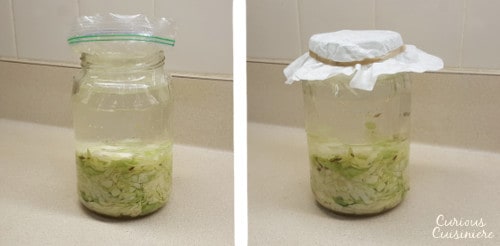 Finally, the whole jar needs to be covered so that we don’t get any unwelcome visitors in our sauerkraut. This can be done with a clean towel, cheesecloth, or (our favorite method) a coffee filter.
Notes
While the sauerkraut is fermenting, you may notice it bubbling and foaming. This is normal and can be skimmed off before you refrigerate your sauerkraut.
If at any point your sauerkraut starts to turn a strange color or get fuzzy, your preparation probably was not as clean as you thought. You'll need to throw away this batch and start over.
Tried this recipe?Let us know how it was!